


PANDA Eco-Friendly Gold Leaching Agent: A Non-Toxic Cyanide Alternative for High-Sulfur Ores & CIP/CIL Plants
Introduction: The Shift Towards Non-Toxic Gold Mining
For over a century, cyanidation has been the dominant method for gold extraction. However, the high toxicity of sodium cyanide (NaCN) poses severe environmental risks, including groundwater pollution. With increasing global regulations restricting cyanide use, the mining industry is urgently seeking effective, non-toxic alternatives.
This article explores the FKN PANDA environmentally friendly gold leaching agent, a high-tech product developed in China. We will analyze how this eco-friendly gold dressing agent performs against traditional cyanide methods, specifically focusing on its efficiency in treating complex ores and the critical role of coconut shell activated carbon in the recovery process.
What is the PANDA Environmentally Friendly Gold Leaching Agent?
The PANDA agent is a non-cyanide, alkaline chemical formulation designed to dissolve gold without generating toxic cyanide-laden wastewater or residue. It presents a sustainable solution for gold refineries looking to maintain high recovery rates while adhering to strict environmental standards.
Comparative Performance: PANDA vs. Cyanide (NaCN)
Extensive testing on various ore types has proven that the PANDA agent is a viable replacement for sodium cyanide. The research focused on three specific ore samples:
Low-Sulfur Oxide Ore (1#): While PANDA performed well, the leaching speed was slower compared to sulfide ores.
High-Sulfur Gold Ore (2#): This is where PANDA excels. The agent demonstrated a remarkable ability to penetrate sulfide coatings that often wrap gold particles. In fact, the leaching speed for this ore type was significantly faster than the oxide ore, achieving results comparable to cyanide within 24 hours.
Roasted Sand Acid Leaching Residue (3#): The PANDA agent proved highly effective on this processed residue, matching the leaching efficiency of traditional cyanidation methods.
Key Finding:
The consumption of the PANDA agent is currently 1 to 1.3 times higher than NaCN. However, its ability to operate within existing carbon-in-pulp (CIP) or carbon-in-leach (CIL) infrastructure—without requiring costly equipment modifications—makes it a cost-effective and eco-friendly upgrade.
Optimizing Activated Carbon Adsorption
A critical step in the gold recovery process is the adsorption of dissolved gold onto activated carbon. The study revealed crucial insights into how activated carbon interacts with the PANDA leaching solution.
1. The Importance of pH Control
The pH value of the solution dramatically impacts adsorption efficiency. Testing showed that maintaining the pH between 10.0 and 10.5 is optimal.
At pH 12, the gold adsorption rate dropped significantly (from ~80% to ~67%).
Within the 10.0-10.5 range, activated carbon exhibits high selectivity for gold, even in the presence of other metals like copper.
2. Selective Adsorption Properties
One of the standout features of using activated carbon with the PANDA agent is its selectivity.
Gold & Silver: Activated carbon rapidly and completely adsorbs gold and silver from the pregnant solution.
Copper: The adsorption rate for copper remains very low (less than 5% in most tests), which is highly beneficial as it prevents carbon fouling and simplifies the downstream recovery process.
Conclusion
The PANDA environmentally friendly gold leaching agent represents a significant advancement in sustainable mining technology. It effectively addresses the environmental hazards associated with cyanide while maintaining competitive leaching rates, particularly for high-sulfur gold ores and roasted sand residues.
Image Gallery
Table 1:Chemical Composition Analysis of PANDA Gold Dressing Agent.
Caption: Composition breakdown showing Sodium Oxide, Nitrogen, and Ammonium components.
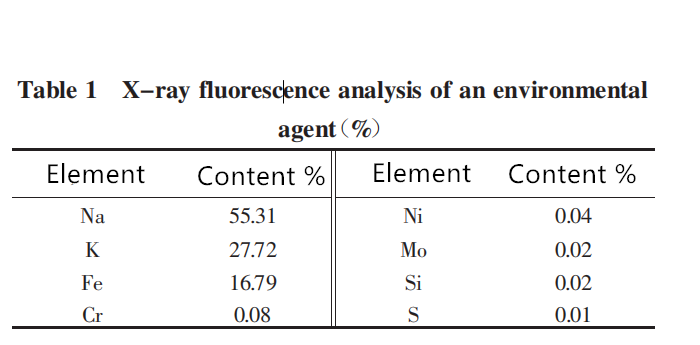
Figure 1 & 2): Leaching curves comparing FKN PANDA dosage vs. gold recovery rate for different ores.
The test results are shown in Figures 1-2.
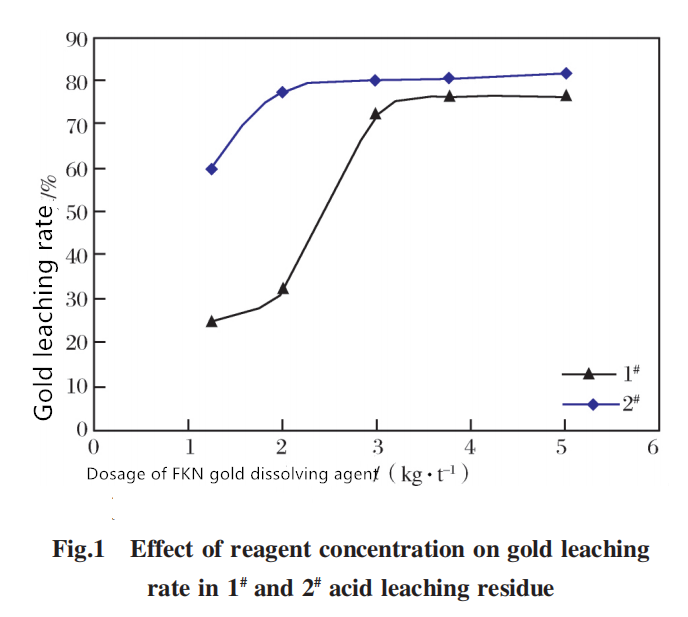
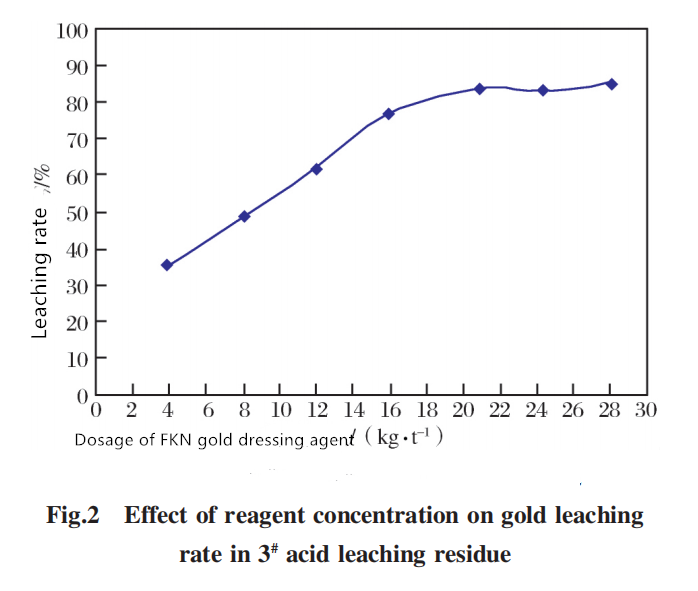
Caption: Gold leaching efficiency of FKN PANDA gold dressing agent on Low-Sulfur (1#), High-Sulfur (2#), and Roasted Sand (3#) ores.
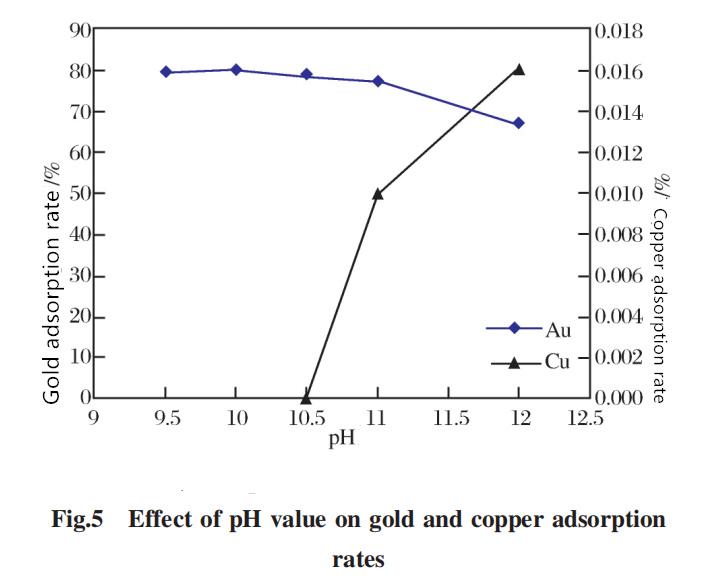
Figure 5): The effect of pH on Gold and Copper adsorption.
Caption: Optimal adsorption occurs at pH 10.0-10.5; performance drops sharply at higher pH levels.
Related Catalogues:
Related Products:
Related Solutions:
GOLD RECOVERY OPTIMIZATION SYSTEM
CYANIDE MANAGEMENT & ENVIRONMENTAL COMPLIANCE SYSTEM
Frequently Asked Questions: FKN PANDA gold dressing Agent & Activated Carbon
1. Is the FKN PANDA environmentally friendly gold leaching agent truly non-toxic, and how does its composition differ from cyanide?
Yes. Unlike Sodium Cyanide (NaCN), the FKN PANDA gold dressing agent is a non-cyanide, alkaline chemical formulation. According to the Material Safety Data Sheet (MSDS) and chemical analysis, its primary components include Sodium Oxide (35-50%), Nitrogen (12-20%), and Ammonium (7-12%). This composition eliminates the risk of toxic hydrogen cyanide gas generation, making it safer for workers and the environment.
2. Can we use our existing CIP (Carbon-in-Pulp) or CIL equipment if we switch to the FKN PANDA gold dressing agent?
Absolutely. A major advantage of the FKN Panda agent is its compatibility with existing infrastructure. Gold mining enterprises do not need to add or modify production equipment. The process parameters (like pulp density and stirring time) are similar to traditional cyanidation, allowing for a seamless transition without capital investment in new machinery.
3. What is the optimal pH range for activated carbon adsorption when using the FKN Panda gold dressing agent?
Precise pH control is critical. The research indicates that the optimal pH range for activated carbon adsorption is 10.0 to 10.5. Operating outside this range, particularly at higher pH levels (e.g., pH 12), significantly reduces the gold adsorption rate. Maintaining this specific window ensures maximum recovery efficiency.
4. Does the FKN Panda gold dressing agent work well on high-sulfur ores, which are typically difficult to process?
Yes, it performs exceptionally well on high-sulfur ores. Testing showed that the FKN Panda gold dressing agent has a strong ability to oxidize and penetrate sulfide coatings that often wrap gold particles. In comparative trials, the leaching speed for high-sulfur gold ore using FKN Gold dressing agent was significantly faster than for oxide ores, matching the efficiency of traditional cyanide methods.
5. How does activated carbon selectivity work with the FKN gold dressing agent agent? Does it adsorb copper as well?
Activated carbon demonstrates high selectivity for gold and silver when used with the FKN Panda gold dressing agent, while largely rejecting copper. In testing, even after extended periods, the adsorption rate of copper remained very low (below 5% in most cases). This selectivity is beneficial as it prevents carbon "poisoning" and simplifies the elution and smelting stages downstream.