


Dodecylamine (DDA / Laurylamine) – Technical Data Sheet
Application Scope
Dodecylamine (DDA) is a cationic collector widely used in reverse flotation for removing siliceous gangue from oxidized minerals. As a primary amine (C₁₂H₂₇N), it exhibits strong electrostatic adsorption onto negatively charged quartz and silicate surfaces, making it an important reagent for desilication and mineral upgrading in critical mineral beneficiation circuits.
DDA is mainly applied in reverse flotation systems where selective separation between valuable minerals and silicate impurities is required. Its applications include lithium, magnesium, titanium, tungsten, tin and other critical mineral processing operations.
Lithium Ores – Spodumene Beneficiation (Primary Application)
Among critical mineral applications, spodumene beneficiation represents one of the most significant uses of DDA. In lithium ore flotation circuits, DDA is applied to remove silicate gangue minerals such as quartz, feldspar and mica through reverse flotation, where silicate impurities are selectively floated while lithium-bearing minerals remain in the concentrate with suitable depressant systems.
Hydroxypropyl-modified DDA derivatives have demonstrated improved water solubility and enhanced collecting ability for quartz separation across a broad pH range. These characteristics support lithium ore upgrading by improving silicate removal efficiency and maintaining stable flotation performance.
Magnesite (Magnesium Ores) – Reverse Flotation Desilication
DDA is an important component in collector formulations for magnesite beneficiation, where quartz and other silicate gangue removal is required for producing higher-grade magnesium concentrates.
DDA-based collector systems combined with amphoteric surfactants and frothers provide selective silica removal performance in reverse flotation circuits. These formulations offer practical solutions for processing low-grade magnesite resources and improving mineral upgrading efficiency.
Titanium Ores – Ilmenite & Rutile Beneficiation
DDA is used in titanium ore processing for removing silicate gangue from ilmenite and rutile concentrates through reverse flotation. The cationic collector selectively floats quartz and feldspar impurities while titanium-bearing minerals remain in the underflow.
This application utilizes DDA's strong affinity for negatively charged silicate surfaces, supporting effective titanium concentrate upgrading.
Tungsten Ores – Scheelite & Wolframite Desilication
In tungsten beneficiation, DDA is applied for silicate gangue removal from scheelite and wolframite concentrates through reverse flotation circuits. The collector promotes flotation of quartz and other siliceous impurities while tungsten minerals are maintained through suitable depression conditions.
This approach helps improve WO₃ upgrading efficiency before subsequent processing stages.
Other Applications
DDA is also applied in reverse flotation circuits for antimony ores where silicate gangue removal is required, as well as tin beneficiation processes involving cassiterite concentrate desilication.
Its versatility across multiple critical mineral systems highlights the importance of DDA as a fundamental cationic collector for silicate separation.
Mechanism
Dodecylamine adsorbs onto mineral surfaces through electrostatic attraction and hydrogen bonding. As a cationic primary amine, DDA protonates in aqueous solution to form RNH₃⁺ at pH below its pKa (~10.6), enabling strong interaction with negatively charged silicate mineral surfaces.
On quartz surfaces, adsorption occurs through electrostatic forces and hydrogen bonding between amine groups and surface silanol (Si–OH) sites. On kaolinite and other aluminosilicate minerals, DDA molecules form adsorption layers driven by hydrophobic interactions between hydrocarbon chains.
In flotation circuits, DDA is typically combined with depressants or modifiers that selectively control mineral surface properties while maintaining silicate floatability for effective separation.
Physicochemical Properties
| Property | Value |
|---|---|
| Chemical Name | Dodecylamine / 1-Aminododecane / Laurylamine |
| CAS Number | 124-22-1 |
| Molecular Formula | C₁₂H₂₇N |
| Molecular Weight | 185.35 g/mol |
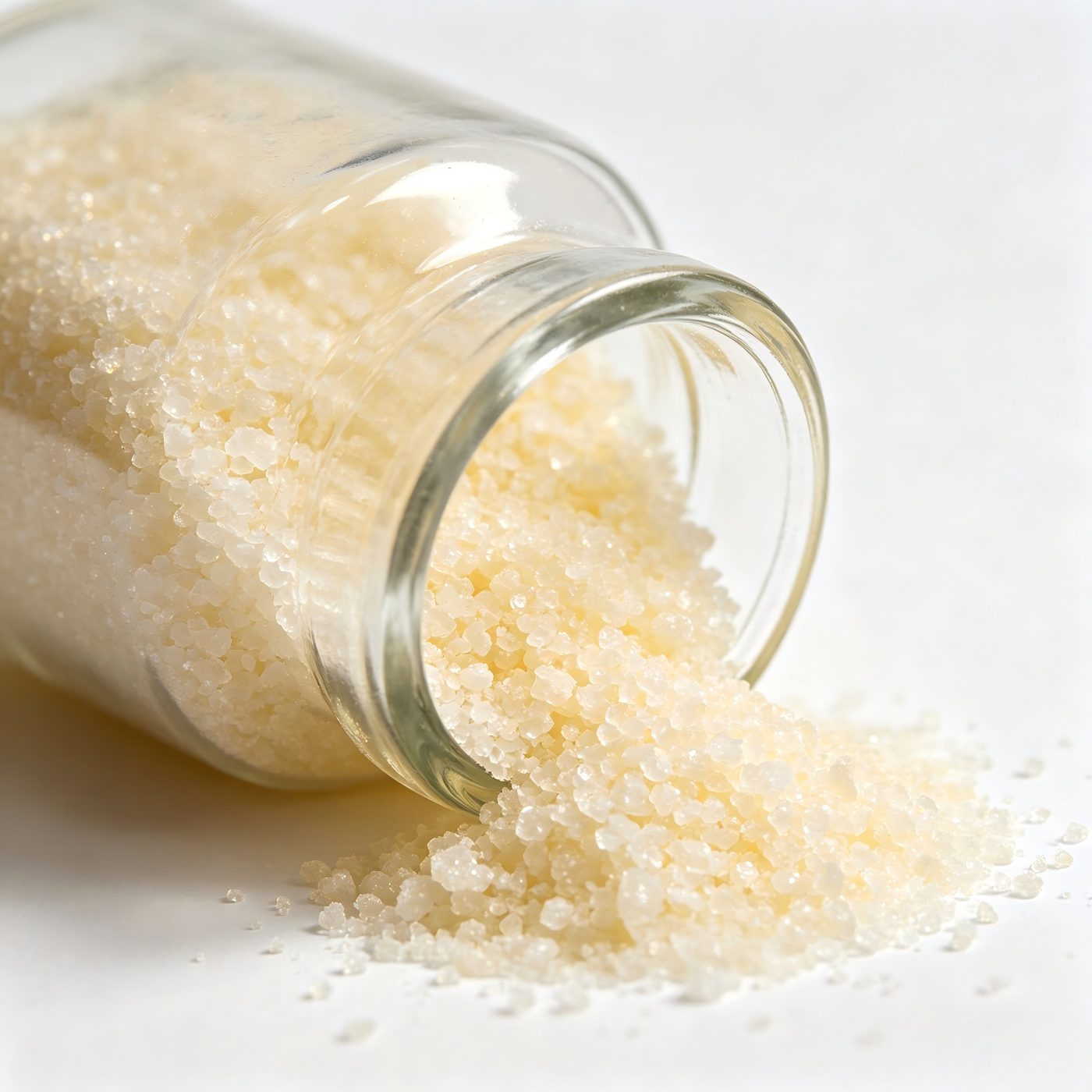
| Appearance | Colorless to white crystalline solid |
| Melting Point | 28.3 °C |
| Boiling Point | 258–259 °C |
| Density (20°C) | 0.8015 g/cm³ |
| Solubility | Soluble in ethanol, ether, benzene and chloroform; slightly soluble in water |
| Purity | ≥95.0% (industrial grade) |
Specifications
Dodecylamine is supplied as an industrial-grade cationic collector with consistent chemical properties. Application performance can be optimized according to ore characteristics, flotation circuit conditions, pH environment and reagent combinations.
Its stable quality profile makes it suitable for mineral processors requiring reliable supply for critical mineral flotation operations.
Storage & Handling
Store DDA in tightly sealed containers in a cool, dry and ventilated warehouse. Protect the product from moisture, direct sunlight and heat sources. The material is hygroscopic and may cake after moisture absorption.
During handling, use chemical-resistant gloves, goggles and protective clothing. Avoid skin contact and inhalation of dust or vapors. In case of spillage, collect mechanically and dispose according to applicable environmental regulations.
The standard shelf life is ≥12 months under recommended storage conditions.
Advantages / Limitations
Advantages
Excellent selectivity for quartz and silicate minerals in reverse flotation circuits.
Effective collector performance for critical mineral desilication applications.
Suitable for lithium, magnesite, titanium, tungsten and tin beneficiation systems.
Good tolerance in water conditions where some anionic collectors may underperform.
Cost-effective alternative to specialty amine collectors.
Can be used as a precursor for modified amine collector development.
Limitations
Performance is influenced by pH conditions and mineral surface characteristics.
Some applications require elevated temperature (30–40°C) for complete dissolution.
Foam control may require additional frothers or flotation modifiers.
Collector performance depends on ore composition and reagent combinations.
Requires appropriate handling due to skin and respiratory irritation potential.
Not effective for direct flotation of target oxide minerals.
Summary
Dodecylamine (DDA) is a key cationic collector for reverse flotation desilication in critical mineral processing. Its selective adsorption on quartz and silicate minerals, cost efficiency and compatibility with different flotation systems make it an important reagent for mineral upgrading.
With established applications in lithium, magnesite, titanium, tungsten and tin beneficiation, DDA provides reliable silicate removal performance for modern critical mineral operations. Supported by consistent-grade supply and technical application service, DDA helps mineral processors improve flotation stability and achieve efficient concentrate upgrading.
Dodecylamine DDA (Laurylamine) – FAQ
Q1. What types of oxide ores and non-metallic minerals are suitable for Dodecylamine DDA flotation?
Dodecylamine DDA (Laurylamine) is a cationic collector widely used in the flotation of oxide minerals and non-metallic minerals with negatively charged surfaces. Typical applications include quartz, feldspar, iron-containing silicate minerals, potash feldspar, and certain oxide ore systems. Its flotation performance depends on mineral surface properties, pulp pH, slurry composition, and the presence of modifiers. In industrial mineral processing, Dodecylamine DDA is generally evaluated through laboratory flotation tests to determine suitable dosage, conditioning conditions, and compatibility with depressants before commercial application.
Q2. How does Dodecylamine DDA perform in quartz flotation and reverse flotation processes?
Dodecylamine DDA is commonly used as a collector in quartz flotation and reverse flotation processes because its positively charged amine groups can adsorb onto negatively charged quartz surfaces under suitable pH conditions. It is frequently applied for the separation of quartz from iron ore, feldspar, and other mineral systems. The flotation selectivity depends on pH control, depressant selection, pulp chemistry, and gangue mineral composition. Proper reagent optimization through laboratory testing is recommended to achieve effective separation between target minerals and unwanted silica-bearing components.
Q3. Can Dodecylamine DDA be used in lithium mineral flotation, such as lepidolite and spodumene processing?
Dodecylamine DDA may be considered in certain lithium mineral flotation systems, especially where amine collectors are required for the flotation of silicate gangue minerals or reverse flotation processes. The effectiveness of Dodecylamine DDA depends on the lithium mineral type, associated gangue minerals, and selected flotation flowsheet. Lepidolite and spodumene have different surface characteristics, requiring different reagent strategies. Laboratory flotation tests are necessary to evaluate collector dosage, selectivity, and compatibility with depressants or modifiers for each specific lithium ore.
Q4. Is Dodecylamine DDA suitable for flotation systems with high calcium and magnesium content?
Dodecylamine DDA can be applied in some mineral systems containing calcium and magnesium minerals, but high levels of carbonate minerals such as calcite and dolomite may affect flotation selectivity. These minerals can interact with reagents and influence collector adsorption behavior. In high-calcium or high-magnesium pulp systems, proper use of depressants, dispersants, and pH regulators is often required. The actual performance of Dodecylamine DDA should be verified through mineralogical analysis and flotation testing to optimize reagent conditions for the specific ore.
Q5. How does high clay content affect the performance of Dodecylamine DDA in flotation?
High clay content may influence Dodecylamine DDA flotation performance by increasing reagent consumption, affecting slurry rheology, and interfering with particle-bubble attachment. Fine clay particles can also increase froth entrainment and reduce concentrate selectivity. In practical flotation operations, measures such as desliming, pulp conditioning, and dispersant addition may help improve reagent efficiency. The influence of clay minerals should be evaluated through laboratory testing using representative ore samples to determine suitable Dodecylamine DDA dosage and operating conditions.
Q6. How should Dodecylamine DDA dosage be optimized in mineral flotation operations?
The optimum dosage of Dodecylamine DDA depends on mineral composition, particle size distribution, pulp pH, water chemistry, and the concentration of interfering minerals. Excessive collector dosage may increase non-selective flotation, while insufficient dosage may reduce recovery. Mineral processing plants usually determine the appropriate dosage through bench-scale flotation tests by evaluating recovery, concentrate grade, and selectivity indexes. Continuous monitoring and adjustment may be required when ore characteristics or process conditions change during production.
Q7. Does Dodecylamine DDA maintain stable performance under low-temperature or high-salt water conditions?
Low temperature and high-salt water conditions can influence the dispersion, adsorption behavior, and flotation kinetics of amine collectors such as Dodecylamine DDA. In cold regions or operations using seawater and recycled process water, factors including reagent preparation, pulp conditioning time, water chemistry, and pH control should be carefully considered. Dodecylamine DDA performance should be verified under actual site conditions through flotation testing to ensure stable mineral recovery and acceptable concentrate quality.
Q8. Can Dodecylamine DDA be used together with depressants and other flotation reagents?
Dodecylamine DDA is commonly combined with depressants, pH regulators, dispersants, and other flotation reagents to improve mineral separation efficiency. The interaction between amine collectors and other reagents depends on mineral surface chemistry and reagent addition sequence. Proper conditioning time and order of addition can influence adsorption and flotation selectivity. In industrial applications, reagent compatibility is normally confirmed through laboratory flotation tests and process optimization studies before implementation in commercial mineral processing plants.
Q9. What factors should be checked when Dodecylamine DDA flotation selectivity decreases during plant operation?
When Dodecylamine DDA flotation selectivity decreases, operators should review several key parameters, including ore mineralogy changes, pulp pH, particle size distribution, water quality, reagent dosage, conditioning time, and froth characteristics. Increased clay content, changes in recycled water chemistry, excessive collector addition, or improper depressant performance may affect separation efficiency. A systematic evaluation combining plant data, mineral analysis, and laboratory testing can help identify the cause and optimize the flotation reagent system.
Q10. What role does Dodecylamine DDA play in reverse flotation processes for industrial minerals and ores?
Dodecylamine DDA plays an important role as a cationic collector in reverse flotation processes where unwanted silicate or quartz minerals need to be removed from valuable mineral concentrates. It is widely considered in applications such as iron ore desilication and feldspar-related mineral separation. Its effectiveness depends on mineral surface properties, depressant selection, pulp chemistry, and process conditions. For each ore type, laboratory testing is recommended to establish the most suitable reagent scheme and operating parameters before industrial-scale application.