


Industrial Oleic Acid – Technical Data Sheet
Application Scope
Industrial oleic acid is a widely used anionic collector for oxidized mineral flotation, valued for its strong collecting ability, cost efficiency, and non-toxic characteristics. As an unsaturated C18 fatty acid, it forms hydrophobic metal-carboxylate complexes on mineral surfaces to improve particle attachment during flotation.
Its applications mainly include scheelite and iron ores, fluorite, lithium ores, and other oxidized mineral beneficiation systems.
Scheelite (Tungsten) & Iron Ores (Primary Application)
Industrial oleic acid is one of the most established fatty acid collectors for scheelite flotation. The carboxyl group interacts with calcium ions on scheelite surfaces through oxygen atoms, forming calcium oleate precipitates that enhance surface hydrophobicity.
Because scheelite and calcite have similar calcium-active sites, oleic acid alone may show limited selectivity. Modified collector systems, such as oleic acid combined with palmitic acid, can improve separation performance by enhancing collector adsorption on scheelite while reducing calcite flotation.
In iron ore beneficiation, industrial oleic acid is applied in anionic reverse flotation circuits after saponification. It is commonly used with NaOH as pH modifier, starch as depressant, and CaO as activator to improve selectivity and reduce reagent consumption.
Fluorite (Calcium Fluoride)
Oleic acid is a conventional collector for fluorite flotation due to its strong interaction with calcium-containing mineral surfaces. However, low-temperature performance may be limited because of reduced solubility and dispersion.
Modified oleic acid systems and emulsion formulations have been developed to improve fluorite recovery under challenging conditions. Sulfuric acid-modified oleic acid demonstrates improved collecting performance, while oleic acid emulsions have been applied successfully in low-temperature fluorite flotation circuits.
Lithium Ores (Spodumene)
Industrial oleic acid is also applied in spodumene flotation. The iodine value of oleic acid influences flotation performance, with higher unsaturation improving adsorption behavior on aluminum active sites of spodumene surfaces.
Studies using adsorption analysis, zeta potential, XPS, FTIR, and molecular simulation indicate that higher iodine value grades can enhance collector-mineral interaction and improve lithium mineral flotation performance.
Other Applications
Industrial oleic acid is additionally used in boron ore beneficiation, including ascharite flotation separation from serpentine gangue. Modified oleic acid-based collectors have also been investigated for sillimanite and garnet recovery from tailings.
Mechanism
Oleic acid acts as an anionic collector through chemisorption between its carboxyl group (-COOH) and active metal sites on mineral surfaces.
The carboxyl oxygen atoms interact with calcium ions on scheelite and fluorite, aluminum sites on spodumene, and magnesium-related active sites on other oxidized minerals, forming hydrophobic metal-carboxylate complexes.
The degree of unsaturation, represented by iodine value, affects adsorption strength and molecular interaction with mineral surfaces. Higher unsaturation generally improves molecular flexibility and surface affinity, while selective performance may require co-collectors or chemical modification for complex separation systems.
Physicochemical Properties
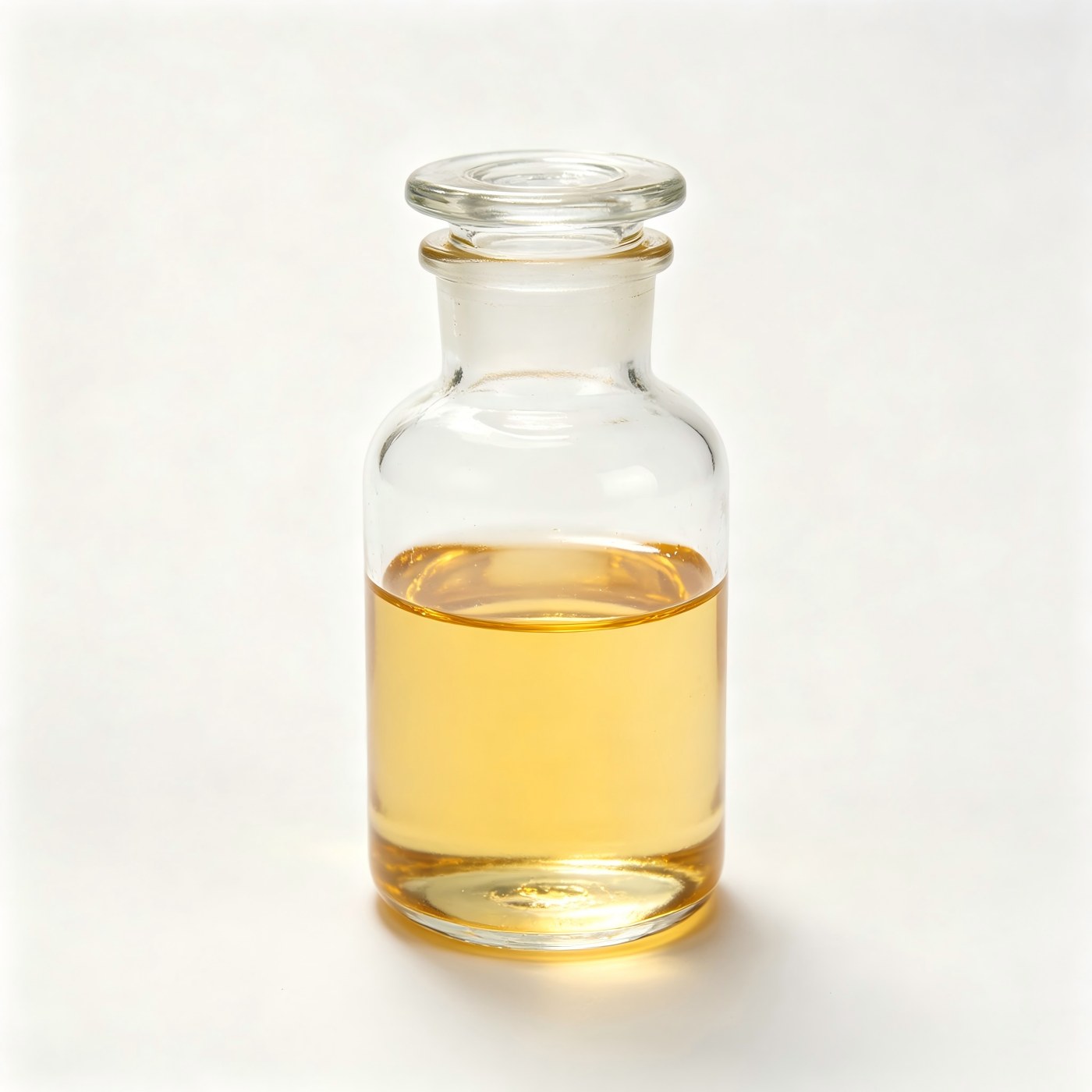
Industrial oleic acid is a colorless to pale yellow oily liquid consisting mainly of C18 unsaturated fatty acid components. Its flotation performance depends on acid value, iodine value, saponification characteristics, and grade composition.
Specifications
| Property | Value |
|---|---|
| Chemical Name | (Z)-9-Octadecenoic Acid / Oleic Acid |
| CAS Number | 112-80-1 |
| Molecular Formula | C₁₈H₃₄O₂ |
| Molecular Weight | 282.47 g/mol |
| Appearance | Colorless to pale yellow oily liquid |
| Acid Value | 190–205 mg KOH/g |
| Iodine Value | 110–145 g I₂/100g (varies by grade) |
| Saponification Value | 190–210 mg KOH/g |
| Solidification Point | ≤ 11–18°C (grade dependent) |
| Solubility | Insoluble in water; soluble in alcohols, ethers, chloroform, benzene |
Storage & Handling
Store in tightly sealed containers in a cool, dry, and ventilated warehouse away from direct sunlight and heat sources.
Industrial oleic acid is susceptible to oxidation. Nitrogen blanketing is recommended for long-term storage. During handling, use chemical-resistant gloves, goggles, and protective clothing.
Avoid skin contact and inhalation of vapors. Collect spills with inert materials and dispose of waste according to local environmental regulations.
Advantages / Limitations
Advantages
Strong collecting ability for oxidized mineral flotation.
Low-cost and non-toxic fatty acid collector.
Widely established industrial application.
Iodine value adjustment allows performance optimization.
Compatible with modified collectors and co-collector systems.
Provides inherent frothing properties during flotation.
Limitations
Limited selectivity between similarly charged minerals such as scheelite and calcite.
Low-temperature performance may require modification.
Often requires saponification, co-collectors, or formulation optimization.
Performance is influenced by pulp pH, temperature, and iodine value variation.
Summary
Industrial oleic acid remains an important collector for oxidized mineral flotation, with established applications in tungsten, iron, fluorite, and lithium ore beneficiation.
Its strong collecting ability, economic advantages, and formulation flexibility make it a widely used reagent for mineral processing operations. Different iodine value grades allow adjustment of flotation performance according to ore characteristics and process requirements.
Industrial Oleic Acid – FAQ
Q1. What types of oxide ores and non-metallic minerals are more suitable for Industrial Oleic Acid flotation?
Industrial Oleic Acid is widely used as an anionic collector for the flotation of oxide minerals and non-metallic minerals, especially those with surface characteristics suitable for fatty acid adsorption. Typical applications include fluorite, phosphate, scheelite, calcite, dolomite, feldspar, and certain lithium-bearing minerals. Its performance depends on mineral surface chemistry, gangue composition, water quality, and reagent conditions. In industrial practice, Industrial Oleic Acid is usually evaluated through laboratory flotation tests to determine suitable dosage, pH range, and compatibility with depressants or activators before scale-up.
Q2. How does Industrial Oleic Acid perform in fluorite flotation?
Industrial Oleic Acid is commonly applied as a collector in fluorite flotation due to its strong adsorption ability on calcium-containing mineral surfaces. In fluorite beneficiation, its performance is influenced by pulp pH, water hardness, gangue minerals such as calcite and barite, and the selection of depressants. A suitable reagent scheme often combines Industrial Oleic Acid with modifiers to improve selectivity between fluorite and carbonate gangue minerals. Laboratory testing is recommended to optimize collector dosage, conditioning time, and flotation conditions according to the specific ore characteristics.
Q3. Can Industrial Oleic Acid be used for lithium mineral flotation such as lepidolite and spodumene?
Industrial Oleic Acid may be considered as a collector in certain lithium mineral flotation systems, but its effectiveness depends strongly on mineral type and process conditions. Lepidolite and spodumene have different surface properties, requiring different reagent strategies. For lithium ore beneficiation, Industrial Oleic Acid is generally evaluated together with pH regulators, activators, and depressants to improve mineral selectivity. Bench-scale flotation tests are important to determine whether it can achieve the required recovery and concentrate quality for a specific lithium ore deposit.
Q4. Is Industrial Oleic Acid suitable for high calcium and high magnesium mineral systems?
Industrial Oleic Acid can be applied in mineral systems containing calcium and magnesium minerals, but high levels of carbonate gangue may affect selectivity. Minerals such as calcite and dolomite can consume fatty acid collectors due to similar surface reactions, potentially increasing reagent consumption. In these conditions, proper use of depressants, dispersants, and pH control is important. Process optimization should focus on balancing collector adsorption on valuable minerals while reducing unwanted flotation of carbonate gangue minerals.
Q5. What factors affect the flotation performance of Industrial Oleic Acid in high clay content pulp?
High clay content can influence Industrial Oleic Acid performance by increasing reagent adsorption, reducing effective collector availability, and affecting bubble-particle interaction. Excessive slimes may also increase froth entrainment and reduce concentrate selectivity. In practical flotation operations, desliming, pulp conditioning, dispersant addition, and optimized collector dosage are commonly considered to improve performance. The impact of clay minerals should be evaluated through laboratory testing using representative ore samples before applying Industrial Oleic Acid in commercial flotation circuits.
Q6. How should Industrial Oleic Acid dosage be optimized in flotation operations?
The optimum dosage of Industrial Oleic Acid depends on mineral composition, particle size distribution, pulp density, pH, and the presence of interfering gangue minerals. Excessive collector addition may increase non-selective flotation and entrainment, while insufficient dosage may reduce recovery. Industrial practice usually determines dosage through flotation experiments by comparing recovery, concentrate grade, and selectivity indexes. For new ore bodies or changing feed conditions, periodic reagent optimization may help maintain stable flotation performance.
Q7. Does Industrial Oleic Acid remain effective under low-temperature flotation conditions?
Low-temperature conditions can influence the dispersion, solubility, and adsorption behavior of fatty acid collectors, including Industrial Oleic Acid. In colder mining regions, reagent preparation methods, conditioning temperature, mixing intensity, and dosage adjustment may become important factors. Proper emulsification or conditioning procedures can help maintain stable collector performance. Actual suitability should be verified through flotation testing under the expected site temperature conditions to ensure consistent recovery and concentrate quality.
Q8. How does water hardness affect Industrial Oleic Acid flotation performance?
Water hardness can significantly influence fatty acid collector performance because calcium and magnesium ions may react with carboxylate groups and form less soluble compounds. In high-hardness process water, Industrial Oleic Acid consumption and selectivity may change compared with fresh water conditions. Mining operations using recycled water often need to evaluate water chemistry, including dissolved ions and alkalinity, during reagent selection. Adjustments in pH control, conditioning time, or auxiliary reagents may help maintain stable flotation performance.
Q9. Can Industrial Oleic Acid be combined with depressants and other flotation reagents?
Industrial Oleic Acid is commonly used together with modifiers such as depressants, activators, pH regulators, and dispersants to improve mineral selectivity. The effectiveness of a combined reagent scheme depends on the interaction between the collector and other chemicals. For example, the addition sequence and conditioning time may influence adsorption behavior and flotation response. In industrial applications, reagent compatibility is normally confirmed through laboratory testing and locked-cycle experiments before implementation in a full-scale flotation plant.
Q10. What parameters should be checked when Industrial Oleic Acid shows reduced selectivity during plant operation?
When Industrial Oleic Acid flotation performance decreases, several operating parameters should be reviewed, including ore mineralogy changes, particle size distribution, pulp pH, water quality, reagent dosage, conditioning time, and froth characteristics. Increased clay content, higher levels of carbonate gangue, or changes in recycled water chemistry may also affect selectivity. A systematic process review combining laboratory analysis and plant data can help identify the main cause and determine suitable adjustments to the flotation reagent system.