


Tall Oil (Liquid Rosin / Tall Oil Fatty Acid) – Technical Data Sheet
Application Scope
Tall oil is a byproduct of the kraft pulping process, consisting of fatty acids (primarily oleic and linoleic acids) and rosin acids. As a carboxylate-type anionic collector, it provides a cost-effective and cold-resistant alternative to oleic acid for oxidized mineral flotation applications. Its collector properties support mineral processing operations where selective surface adsorption and stable flotation performance are required.
Iron Ores – Hematite Reverse Flotation
Hematite reverse flotation represents the primary application area for tall oil. In quartz removal circuits, tall oil is commonly formulated with reagents such as dodecyl trimethyl ammonium chloride (DTAC) to improve collector selectivity. A DTAC-to-tall oil ratio of 3:1 at pH 7.0 has demonstrated quartz recovery of 94.67% while maintaining hematite recovery at 8.69%, indicating effective silica separation performance.
Compared with single DTAC collectors, tall oil-containing blends provide improved low-temperature performance and enhanced collector adsorption on quartz surfaces through synergistic physical and chemical interactions. This cold resistance makes tall oil suitable for mineral processing operations in colder regions.
Tungsten Ores – Scheelite & Wolframite
Tall oil is used as a fatty acid collector in tungsten beneficiation, together with oleic acid and oxidized paraffin soap. Its fatty acid components adsorb onto scheelite surfaces through carboxylate-calcium interactions, while the rosin acid fraction contributes additional frothing properties.
Tall oil blends may be combined with chelating collectors or other fatty acid collectors to improve selectivity against calcite gangue in complex skarn-type scheelite ores.
Phosphate Ores – Apatite
Tall oil is widely applied in phosphate rock flotation, commonly formulated with fuel oil and other modifiers. The collector adsorbs onto apatite mineral surfaces through interactions involving calcium ions, while rosin acids contribute to froth stability.
Phosphate beneficiation applications generally operate under alkaline conditions (pH 9–11), often using sodium silicate as a gangue depressant.
Rare Earth Element Ores – Monazite & Florencite
Tall oil has been applied as a fatty acid collector for rare earth mineral flotation, including monazite and florencite recovery. Sodium silicate may be used to depress gangue minerals such as goethite.
Water quality management is important because Ca²⁺ and Mg²⁺ ions may form insoluble calcium or magnesium carboxylates, reducing collector availability and affecting flotation selectivity.
Other Mineral Flotation Applications
Tall oil is also used in ilmenite flotation, fluorite flotation, magnesite flotation, bauxite flotation, and as a component of blended collectors for molybdenum ore flotation.
Mechanism
Tall oil interacts with mineral surfaces through chemisorption involving carboxyl (-COOH) functional groups. The carboxyl oxygen atoms coordinate with metal cations on mineral surfaces, forming hydrophobic metal-carboxylate complexes.
The unsaturated fatty acid components, including linoleic and oleic acids, provide collecting ability through molecular flexibility and interaction with surface metal sites. Rosin acids contribute additional frothing and collecting effects.
Flotation selectivity is mainly influenced by pH conditions and the presence of depressants such as sodium silicate.
Physicochemical Properties
| Property | Value |
|---|---|
| Chemical Name | Tall Oil (Tall Oil Fatty Acid / Liquid Rosin) |
| CAS Number | Not applicable (complex mixture); 8002-26-4 for crude tall oil |
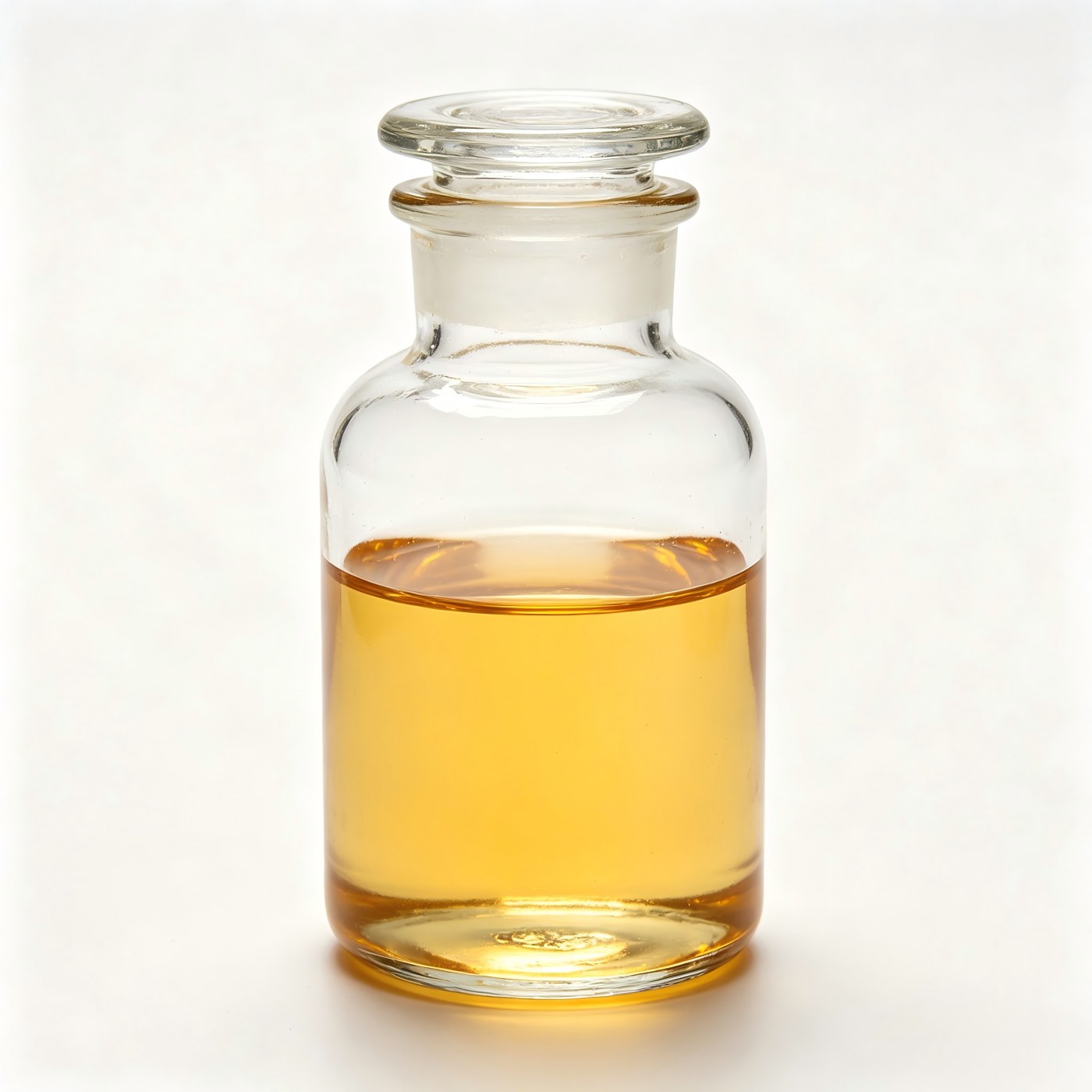
| Appearance | Dark brown to amber viscous liquid |
| Fatty Acid Content | Typically 30–60% (oleic, linoleic, palmitic acids) |
| Rosin Acid Content | Typically 30–60% (abietic-type acids) |
| Unsaponifiables | 5–15% |
| Acid Value | 160–180 mg KOH/g |
| Iodine Value | 120–150 g I₂/100g |
| Density (25°C) | 0.95–0.98 g/cm³ |
| Solubility | Insoluble in water; soluble in organic solvents; saponified form is water-soluble |
| Grades | Crude tall oil (CTO); distilled tall oil (DTO); tall oil fatty acid (TOFA) |
Specifications
Tall oil is available in multiple grades including crude tall oil, distilled tall oil, and tall oil fatty acid. Grade selection can be optimized according to ore characteristics, flotation circuit conditions, and mineral processing requirements.
Storage & Handling
Store tall oil in tightly sealed containers in a cool, dry, and ventilated warehouse. Protect from direct sunlight and heat sources. The product is susceptible to oxidation, and nitrogen blanketing is recommended for long-term storage.
Under recommended storage conditions, shelf life is typically ≥12 months. During handling, use chemical-resistant gloves, goggles, and protective clothing. Avoid skin contact and inhalation of vapors. Spills should be absorbed with inert materials and disposed of according to environmental regulations.
Advantages / Limitations
Advantages
Cost-effective alternative to oleic acid for oxidized mineral flotation.
Superior low-temperature performance compared with oleic acid and oxidized paraffin soap.
Dual collector and frother functionality can help optimize reagent consumption.
Renewable bio-based resource with multiple commercial grades.
Applicable for iron, tungsten, phosphate, rare earth, and titanium beneficiation.
Limitations
Complex composition may cause batch-to-batch variability.
Fatty acid collector selectivity may require combination with depressants or additional reagents.
Rosin acid content may influence selectivity in certain flotation systems.
Water hardness ions such as Ca²⁺ and Mg²⁺ may affect flotation performance.
Not suitable for sulfide ore flotation applications.
Summary
Tall oil is a proven fatty acid collector for oxidized mineral flotation, with hematite reverse flotation as its largest industrial application. Its cold-resistant characteristics, collector-frother functionality, renewable sourcing, and flexible grade selection make it a practical option for mineral processors seeking stable flotation performance and cost efficiency.
With applications in tungsten, phosphate, rare earth, titanium, and other mineral beneficiation processes, tall oil provides adaptable flotation solutions for different ore conditions and processing circuits.
Tall Oil – FAQ
Q1. What types of oxide ores and non-metallic minerals are suitable for Tall Oil flotation?
Tall Oil is an anionic fatty acid collector commonly used in the flotation of oxide minerals and non-metallic minerals with suitable surface properties for fatty acid adsorption. Typical applications include fluorite, phosphate, scheelite, calcite, dolomite, feldspar, and certain lithium-bearing minerals. Its flotation performance depends on mineral composition, surface characteristics, pulp chemistry, and reagent conditions. In practical mineral processing operations, Tall Oil is usually evaluated through laboratory flotation tests to determine appropriate dosage, pH conditions, and compatibility with modifiers before being applied in industrial circuits.
Q2. How does Tall Oil perform as a collector in fluorite flotation?
Tall Oil can be used as a collector in fluorite flotation because its fatty acid components can interact with calcium-containing mineral surfaces. The selectivity between fluorite and carbonate gangue minerals such as calcite and dolomite depends on pulp pH, water chemistry, depressant selection, and conditioning conditions. In many flotation systems, Tall Oil is combined with suitable modifiers to improve separation efficiency. Laboratory testing with representative ore samples is recommended to optimize collector dosage, conditioning time, and flotation parameters according to the specific mineral characteristics.
Q3. Can Tall Oil be applied in lithium mineral flotation, including lepidolite and spodumene?
Tall Oil may be considered as a collector option in certain lithium mineral flotation processes, but its effectiveness varies depending on the lithium mineral type and associated gangue minerals. Lepidolite and spodumene have different surface properties and usually require different reagent schemes. Tall Oil performance should be evaluated together with pH regulators, activators, and depressants to achieve suitable selectivity between valuable lithium minerals and gangue components. Bench-scale flotation tests are important for determining whether Tall Oil is suitable for a specific lithium ore deposit.
Q4. Is Tall Oil suitable for flotation systems with high calcium and magnesium content?
Tall Oil can be used in mineral systems containing calcium and magnesium minerals, but high concentrations of carbonate gangue may influence collector selectivity and consumption. Minerals such as calcite and dolomite may also react with fatty acid collectors, which can increase reagent demand. In high-calcium or high-magnesium flotation systems, the use of appropriate depressants, dispersants, and pH control measures is often required. Process evaluation should focus on maintaining selective adsorption on valuable minerals while minimizing unwanted flotation of gangue minerals.
Q5. How does high clay content affect the performance of Tall Oil in flotation?
High clay content in flotation pulp can affect Tall Oil performance by increasing reagent adsorption, interfering with particle-bubble attachment, and influencing froth stability. Excessive slimes may also reduce selectivity and increase entrainment of fine gangue particles into the concentrate. In industrial applications, measures such as desliming, pulp conditioning, dispersant addition, and optimized reagent dosage may help improve flotation performance. The influence of clay minerals should be assessed through laboratory testing using representative ore samples before full-scale application.
Q6. How should Tall Oil dosage be optimized in mineral flotation operations?
The optimal dosage of Tall Oil depends on ore mineralogy, particle size distribution, pulp density, pH, water quality, and the presence of interfering minerals. Insufficient dosage may result in poor recovery, while excessive dosage may reduce selectivity and increase gangue flotation. Mineral processing plants usually determine the suitable dosage through laboratory and pilot-scale flotation tests by comparing recovery, concentrate grade, and selectivity performance. Continuous monitoring may also be required when ore characteristics or process water conditions change during production.
Q7. Does Tall Oil maintain stable flotation performance under low-temperature conditions?
Low-temperature conditions may affect the dispersion, emulsification behavior, and adsorption efficiency of fatty acid collectors such as Tall Oil. In mining regions with cold climates, reagent preparation methods, conditioning temperature, mixing intensity, and flotation kinetics should be considered during process design. Proper conditioning procedures can help maintain stable collector performance. For operations located in high-latitude or cold environments, flotation testing under actual temperature conditions is recommended to verify recovery and concentrate quality before industrial implementation.
Q8. How does water hardness influence Tall Oil flotation performance?
Water hardness can influence Tall Oil flotation because calcium and magnesium ions may interact with fatty acid components and affect collector availability. In plants using recycled process water or hard water sources, changes in dissolved ions, alkalinity, and mineral content may influence flotation selectivity. Proper evaluation of water chemistry is important when selecting and optimizing Tall Oil reagent schemes. Adjustments in pH control, conditioning time, or auxiliary reagents may be required to maintain consistent flotation performance under different water conditions.
Q9. Can Tall Oil be used together with depressants and other flotation reagents?
Tall Oil is commonly applied together with other flotation reagents, including depressants, activators, pH regulators, and dispersants, to improve mineral separation efficiency. The interaction between Tall Oil and other reagents depends on mineral surface chemistry and the sequence of reagent addition. Proper conditioning order and residence time can influence collector adsorption and flotation response. In industrial practice, reagent compatibility is normally confirmed through laboratory tests and, when necessary, locked-cycle flotation experiments before application in commercial processing plants.
Q10. What parameters should be checked when Tall Oil flotation selectivity decreases during plant operation?
When Tall Oil flotation selectivity decreases, key operating parameters should be reviewed, including ore mineralogy changes, feed particle size, pulp pH, water quality, reagent dosage, conditioning time, and froth characteristics. Increased clay content, higher carbonate gangue levels, changes in recycled water chemistry, or improper reagent addition sequence may affect flotation performance. A systematic analysis combining mineralogical examination and plant operating data can help identify the cause and determine appropriate adjustments to restore stable flotation performance.