


Glycine: A Non-Toxic Leaching Enhancer for Strategic Metal Extraction
Application Scope
Glycine (CAS 56-40-6) is a versatile, non-toxic lixiviant used in hydrometallurgical processes for the extraction of precious and strategic metals. Its selective metal complexation properties make it suitable for gold processing, nickel and cobalt recovery, copper extraction, and lithium battery material recycling applications.
Gold Extraction Application
Glycine has demonstrated significant application potential in gold ore processing, particularly where reducing cyanide consumption and improving environmental performance are important process objectives.
The GlyCat technology developed by Draslovka in partnership with Curtin University uses glycine with reduced cyanide input for gold recovery from complex ores. At Barrick Gold's Bulyanhulu mine, this approach reduced sodium cyanide consumption by 80% while maintaining comparable gold recovery performance. Glycine also supports gold dissolution in alkaline conditions through glycinate complex formation.
In cobalt-glycine catalyzed thiosulfate systems, gold leaching performance has reached 94.85% recovery with reduced reagent consumption, demonstrating the potential of glycine-assisted leaching circuits for optimized gold extraction.
Nickel and Cobalt Recovery Application
Glycine leaching provides selective extraction performance for nickel and cobalt from sulfide ores and flotation slimes. Research results indicate that alkaline glycine systems can achieve high recovery rates while limiting dissolution of unwanted elements such as iron and magnesium.
Ambient-temperature heap leaching studies reported nickel recovery of 83.5% and cobalt recovery of 76.3% at pH 10. For pyrrhotite-rich slimes containing pentlandite, nickel recovery reached 86.2% and cobalt recovery reached 79.7% within 72 hours.
The selective complexation characteristics of glycine help simplify downstream purification by reducing impurity metal dissolution.
Copper Extraction Application
For copper processing, glycine-based leaching technology provides an alternative approach for copper oxide ores that may experience excessive acid consumption during conventional acid leaching.
Glycine selectively extracts copper while leaving non-target metals such as magnesium and iron mainly in the residue. In gold-copper ore systems, glycine leaching achieved 85% gold recovery over 14 days, while increasing temperature to 55°C accelerated leaching kinetics.
Lithium, Nickel and Cobalt Recovery from Battery Materials
Glycine demonstrates application potential in the recovery of lithium, nickel and cobalt from spent lithium-ion battery materials through alkaline glycinate-based hydrometallurgical systems.
Under optimized conditions of 3 mol/L glycine, pH 8, 90°C and 5 vol.% H₂O₂, reported recovery rates reached 96.31% for lithium, 83.18% for cobalt and 91.56% for nickel, while impurity metals including calcium, aluminum, iron and copper remained largely undissolved.
Secondary Application — Palladium Recovery
Glycine leaching systems have also shown potential for palladium and other precious metal recovery. Research continues on solvent extraction and ion exchange technologies for recovering valuable metals from glycine-containing solutions.
Mechanism
Glycine (NH₂CH₂COOH) is the simplest amino acid, containing amino (-NH₂) and carboxyl (-COOH) functional groups that enable metal ion complexation.
Under alkaline conditions, typically pH 9–12, glycine converts into glycinate ions (Gly⁻). These ions coordinate with metal cations to form stable complexes, improving selective dissolution of target metals during hydrometallurgical extraction.
For gold leaching applications, glycine assists gold-thiosulfate complexation and stabilizes dissolved metal species under alkaline conditions. The Co(gly)₂⁻ complex acts as an effective electron acceptor, enhancing gold dissolution performance compared with conventional copper-ammonia systems.
The selective complexation behavior of glycine enables preferential interaction with target metals while limiting dissolution of iron, magnesium and calcium impurities.
Physicochemical Properties
| Parameter | Specification |
|---|---|
| CAS Number | 56-40-6 |
| Molecular Formula | C₂H₅NO₂ |
| Molecular Weight | 75.07 g/mol |
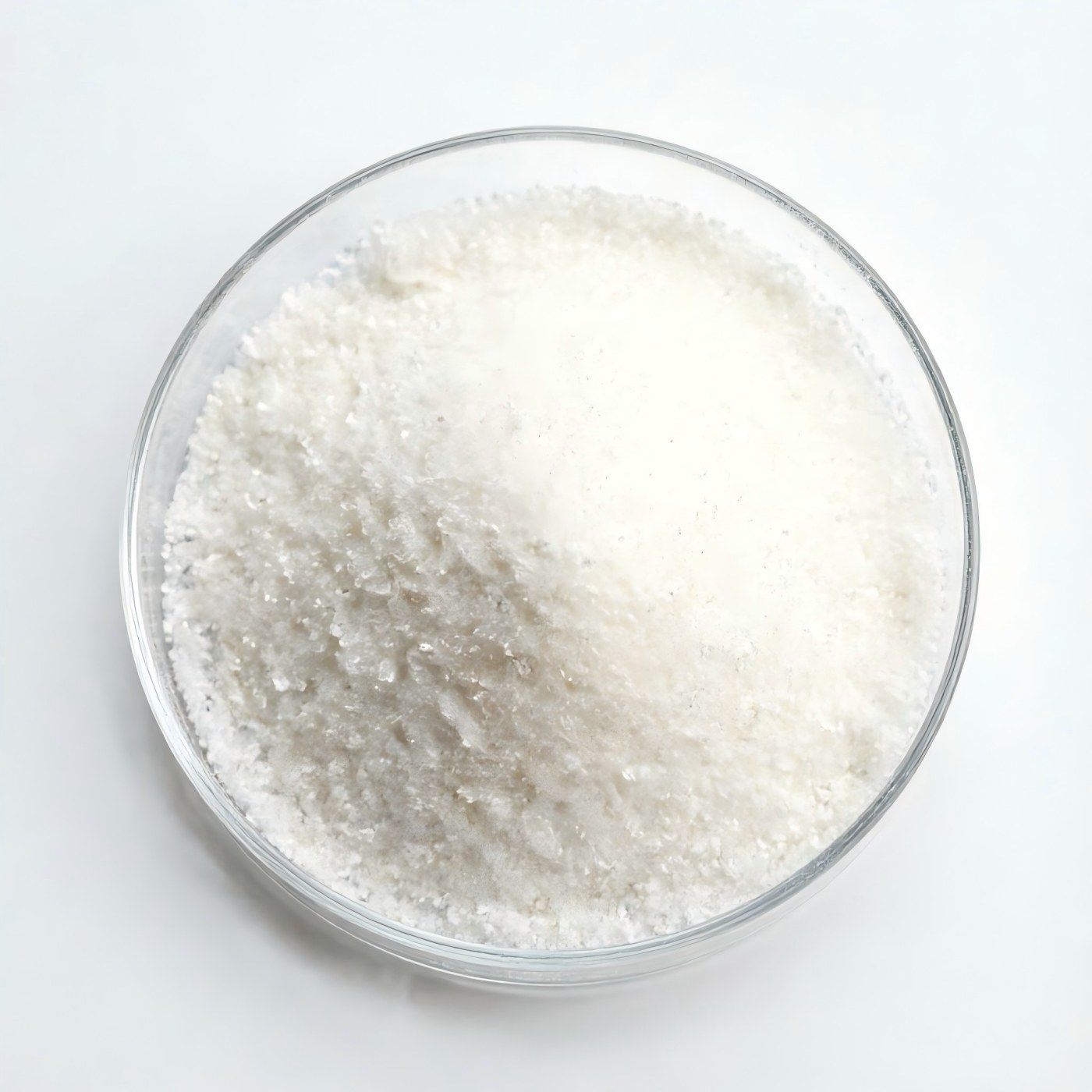
| Appearance | White crystalline powder |
| Assay (Technical Grade) | ≥98.5% |
| pH (1% solution) | 5.5–7.0 |
| Typical Leach pH | 9–12 |
| Solubility | 250 g/L in water (20°C) |
Specifications
Glycine used in mining applications requires consistent chemical quality to ensure stable performance during laboratory testing, pilot trials and commercial hydrometallurgical operations.
The typical technical-grade specification includes a purity level of ≥98.5%, white crystalline appearance and compatibility with alkaline leaching environments.
Storage & Handling
Store glycine in tightly sealed containers in a cool, dry and well-ventilated area. Protect the material from moisture exposure during storage and transportation.
Glycine is non-toxic, non-volatile and biodegradable. Unlike cyanide-based reagents, it does not require specialized hazardous chemical storage procedures. Standard personal protective equipment, including chemical-resistant gloves, safety goggles and dust protection, is recommended during handling.
In case of accidental spillage, collect the material and dispose of it according to applicable local regulations. Glycine remains stable under typical leaching conditions and can be recycled and reused within suitable process circuits.
Advantages / Limitations
Advantages
Non-toxic, recyclable and biodegradable leaching reagent option.
Can reduce cyanide consumption by up to 80% in gold processing circuits.
Provides selective extraction of copper, nickel and cobalt while limiting impurity dissolution.
Suitable for complex ores where conventional cyanidation or acid leaching presents challenges.
Compatible with existing cyanidation and heap leaching infrastructure.
Commercial applications have reported potential operating cost savings.
Limitations
Leaching kinetics may be slower compared with cyanide-based systems and require process optimization.
Some applications may require elevated temperatures of 55–90°C to improve reaction rates.
Low-grade concentrates are generally preferred, while high-grade concentrates may present processing challenges.
Carbonaceous ores may require carbon pre-blinding or oxidation pretreatment.
Silicate or ferric oxide ores may require additional pre-processing before glycine leaching.
Summary
Glycine (CAS 56-40-6) is a non-toxic leaching enhancer designed for strategic metal extraction applications, including gold, nickel, cobalt, copper and lithium recovery.
Its selective glycinate complexation mechanism supports improved process control, reduced impurity dissolution and lower cyanide consumption in suitable gold circuits. Research and commercial applications demonstrate its potential for environmentally responsible hydrometallurgical processing.
Although glycine generally requires process optimization due to slower kinetics compared with cyanide, its biodegradability, selectivity and compatibility with modern mineral processing systems make it an important reagent option for sustainable metal recovery.
Glycine – FAQ
Q1. How does glycine work as a ligand enhancer in gold leaching processes?
Glycine can act as a ligand in hydrometallurgical systems by forming soluble complexes with certain metal ions, which may influence metal dissolution and selectivity during leaching. In gold processing applications, glycine is mainly evaluated as part of a controlled reagent system rather than as a standalone leaching agent. Its effectiveness depends on factors such as ore mineralogy, oxidizing conditions, pH, temperature, dissolved metal ions, and residence time. Laboratory bottle-roll tests are typically recommended to determine whether glycine improves gold dissolution behavior or reduces interference from associated minerals before considering scale-up applications.
Q2. What factors affect the optimal dosage of glycine in gold leaching applications?
The optimal dosage of glycine in gold leaching depends on ore composition, target metal concentration, reagent interactions, and operating conditions. Excessive glycine addition does not necessarily improve leaching performance and may increase reagent consumption. Key evaluation parameters include gold dissolution rate, recovery percentage, dissolved metal species, and leach solution stability. Mining operators usually determine the suitable dosage range through laboratory testing under simulated plant conditions, including controlled pH, pulp density, agitation speed, and leaching time. Process optimization should consider both metallurgical performance and overall reagent efficiency.
Q3. Can glycine improve the leaching performance of high-sulfur gold ores?
High-sulfur gold ores often present challenges because sulfide minerals can encapsulate gold particles and consume oxidizing reagents. Glycine may contribute to improved metal complexation behavior in specific leaching systems, but its effectiveness depends on the degree of sulfide oxidation and the overall reagent combination. For refractory gold ores, glycine is generally evaluated together with oxidation methods, such as pretreatment or controlled oxidizing conditions. Laboratory testing should assess gold liberation, sulfide oxidation level, leaching kinetics, and reagent consumption to determine whether glycine provides a measurable benefit for a specific ore type.
Q4. How should glycine concentration be optimized for gold leaching performance?
Glycine concentration should be optimized based on the interaction between the ore, lixiviant system, and dissolved metal ions. A suitable concentration can support complex formation and maintain stable solution chemistry, while excessive concentration may not provide additional metallurgical benefits. Optimization tests typically examine different glycine levels under consistent conditions, including pH control, temperature, pulp density, and leaching duration. The evaluation should focus on gold recovery, dissolution rate, impurity behavior, and reagent consumption. Site-specific testing is recommended because ore mineralogy and process conditions strongly influence the required glycine concentration.
Q5. How does glycine perform in copper leaching systems for improving metal recovery?
Glycine has been studied in copper hydrometallurgical applications because its ligand properties may influence copper dissolution and solution chemistry. In copper leaching systems, performance evaluation should consider copper recovery rate, leaching kinetics, impurity dissolution, and downstream recovery requirements. The actual effect depends on copper mineral type, oxidation conditions, acid or alkaline environment, and the presence of competing metals. Laboratory testing using representative ore samples is recommended to determine whether glycine can improve copper extraction efficiency or provide advantages in selective metal recovery processes.
Q6. What is the role of pH control when using glycine as a leaching enhancer?
pH control is an important factor when applying glycine in hydrometallurgical processes because glycine’s chemical behavior and metal complexation ability can vary with solution conditions. Different pH ranges may influence metal dissolution, reagent stability, and selectivity between target and impurity minerals. During laboratory evaluation, operators normally monitor pH variation throughout the leaching period and analyze its relationship with recovery performance. Maintaining a suitable pH range helps ensure consistent reagent performance and provides more reliable data for process optimization before industrial application.
Q7. Can glycine be used in nickel and cobalt hydrometallurgical processes?
Glycine has potential applications in nickel and cobalt hydrometallurgy because ligand-assisted leaching systems can influence metal dissolution and separation behavior. For nickel-cobalt ores, especially complex laterite or oxide materials, the effectiveness of glycine depends on mineral composition, leaching conditions, temperature, and the presence of competing ions such as magnesium and iron. Process evaluation should include nickel and cobalt extraction rates, impurity dissolution, and downstream solution treatment requirements. Laboratory and pilot-scale testing are recommended to confirm whether glycine provides technical advantages for a specific ore processing route.
Q8. How does glycine interact with copper-bearing gold ores during leaching?
Copper-bearing gold ores can create challenges during leaching because copper minerals may consume reagents and affect gold dissolution selectivity. Glycine may interact with dissolved copper species through complexation mechanisms, which can influence solution chemistry in certain leaching systems. However, the practical effect depends on copper mineral type, copper concentration, pH, oxidizing conditions, and the selected recovery process. Metallurgical testing should evaluate gold recovery, copper dissolution behavior, reagent consumption, and downstream treatment requirements to determine whether glycine provides benefits for a particular copper-gold ore.
Q9. What factors should be considered when using glycine in mineral leaching optimization?
When applying glycine as a leaching enhancer, mining engineers should consider ore mineralogy, target metal chemistry, reagent compatibility, operating conditions, and economic factors. Important parameters include glycine concentration, pH, temperature, particle size, pulp density, oxidation environment, and leaching time. Laboratory tests such as bottle-roll experiments or controlled agitation tests can help identify suitable conditions and evaluate metallurgical improvements. A comprehensive assessment should include recovery performance, reagent consumption, impurity control, and compatibility with existing plant processes before industrial implementation.
Q10. What are the differences between glycine and other amino acid ligands in leaching applications?
Glycine and other amino acid-based ligands may show different behaviors in hydrometallurgical systems due to differences in molecular structure, metal binding characteristics, and solution chemistry. Glycine is commonly studied because of its simple structure and ability to participate in metal complexation reactions. The practical performance comparison with other ligands, such as alanine, depends on the target mineral, leaching environment, and process objectives. Evaluation should focus on metal recovery, selectivity, reagent stability, and overall process compatibility through laboratory testing rather than relying only on theoretical chemical properties.