


Thiourea: A Non-Toxic Leaching Agent for Strategic Metal Extraction
Application Scope
Thiourea (SC(NH₂)₂) is a promising non-cyanide leaching agent for precious and strategic metal extraction. Due to its strong complexation ability and rapid reaction kinetics in acidic systems, thiourea provides an alternative approach for processing refractory ores, secondary resources, and complex metallurgical residues.
Primary Application — Gold Leaching
Thiourea is mainly applied in gold ore extraction, especially for refractory sulfide and carbonaceous ores where conventional cyanidation can be limited. Under acidic conditions (pH 1–2), thiourea forms stable cationic gold complexes with ferric iron (Fe³⁺) as an oxidizing agent, enabling effective gold dissolution.
Research on thiourea-based leaching systems shows gold recoveries exceeding 98% in optimized conditions. For double refractory gold ores containing both sulfide minerals and carbonaceous matter, bio-oxidation pretreatment followed by thiourea leaching can achieve high gold recovery while reducing gold re-adsorption losses commonly associated with cyanide complexes.
Primary Application — Silver Recovery
Thiourea demonstrates strong performance in silver recovery from secondary resources, including jarosite residues, electronic scrap, and mine tailings.
In acidic thiourea systems with oxalate additives, silver extraction can reach above 98%. Oxalate complexes with ferric and cupric ions, helping reduce thiourea decomposition and improving leaching stability.
Primary Application — Palladium and Platinum Recovery
Thiourea is used as a stripping reagent for palladium and platinum recovery from secondary resources such as spent automotive catalysts. Hydrochloric acid thiourea systems demonstrate high stripping efficiency for precious metal recovery from loaded organic phases and complex leach solutions.
Primary Application — Antimony Extraction
Thiourea is also applied in deep eutectic solvent (DES) systems for antimony extraction from mining residues. Choline chloride-thiourea systems have demonstrated effective antimony dissolution under optimized temperature and reaction conditions.
Secondary Application — Copper Leaching
Thiourea-thiocyanate systems provide an additional hydrometallurgical route for copper recovery from complex sulfide mine tailings.
Mechanism
Thiourea leaching operates through metal complex formation in acidic media. For gold extraction, thiourea reacts with elemental gold to form a soluble cationic complex:
Au⁰ + 2CS(NH₂)₂ → Au[CS(NH₂)₂]₂⁺ + e⁻
Ferric ions (Fe³⁺) act as oxidants to maintain the required solution potential and promote gold dissolution. The presence of oxalate additives can stabilize Fe and Cu complexes, reducing thiourea consumption caused by catalytic decomposition.
For silver recovery, leaching efficiency is mainly controlled by thiourea concentration, pH, temperature, and oxidizing conditions.
Physicochemical Properties
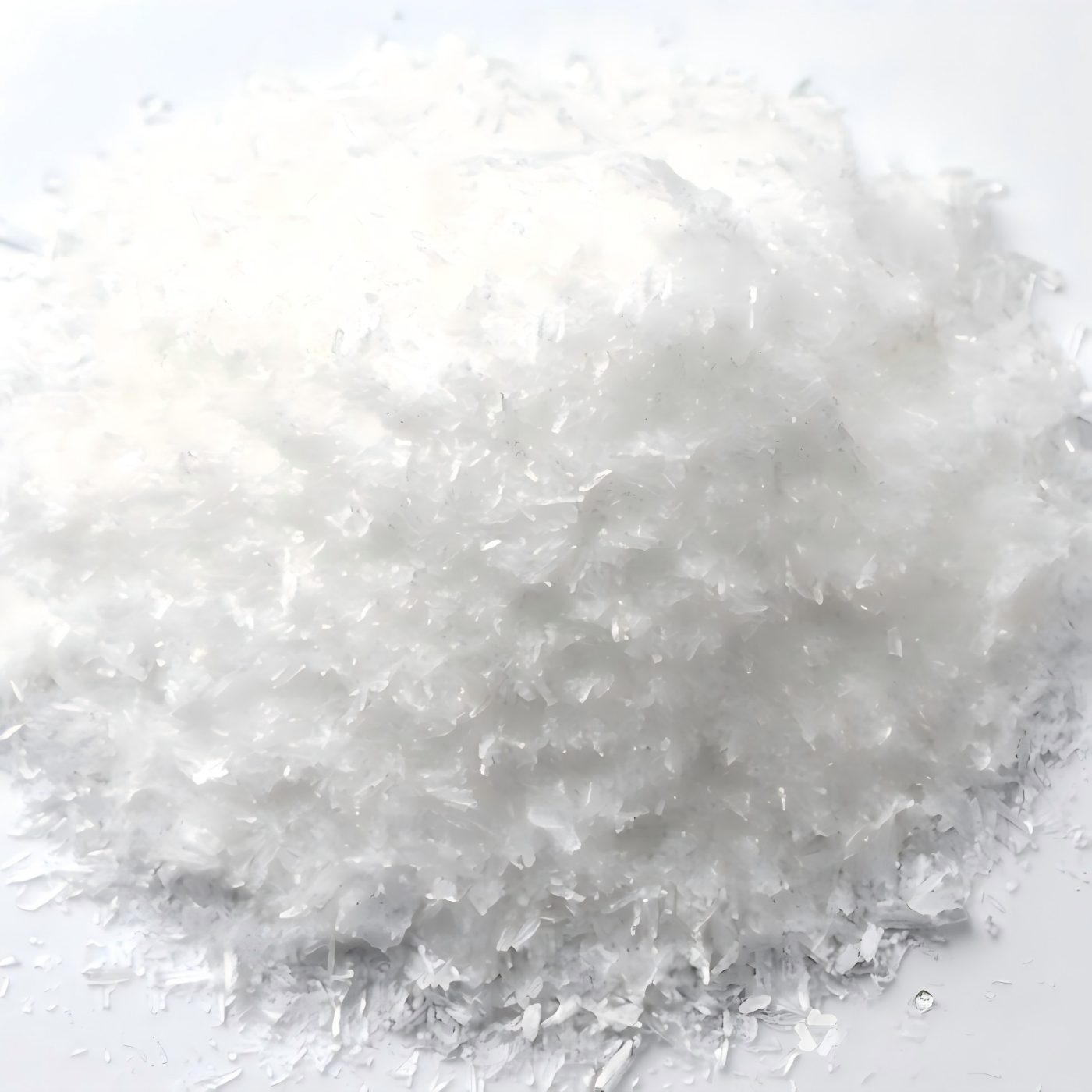
Thiourea is an organic sulfur-containing compound with strong metal complexation capability. Its white crystalline appearance, high solubility, and controlled acidic operating range make it suitable for specialized hydrometallurgical applications.
Specifications
| Parameter | Specification |
|---|---|
| CAS Number | 62-56-6 |
| Molecular Formula | CH₄N₂S |
| Molecular Weight | 76.12 g/mol |
| Appearance | White crystalline solid |
| Assay (technical grade) | ≥99.0% |
| Melting Point | 176–178°C |
| Solubility | 137 g/L in water (20°C) |
| Optimal Leach pH | 1.0–2.0 |
| Typical Dosage | 0.2–0.8 M |
Storage & Handling
Store thiourea in tightly sealed containers in a cool, dry, and well-ventilated area. Protect the material from direct light and strong oxidizing agents.
Thiourea requires controlled handling procedures because it is classified as a possible human carcinogen (Category 2). Operators should use chemical-resistant gloves, safety goggles, and protective clothing during handling.
During leaching operations, acidic conditions should be maintained because thiourea can decompose under strong oxidizing environments and alkaline conditions.
Advantages / Limitations
Advantages
Non-cyanide alternative for precious metal leaching applications
Effective for carbonaceous gold ores where cyanidation performance is limited
Rapid leaching kinetics with gold recovery exceeding 98% under optimized conditions
Compatible with bio-oxidation pretreatment processes
Suitable for silver recovery from jarosite residues and secondary resources
Limitations
Higher reagent consumption due to decomposition reactions with Fe³⁺ and Cu²⁺
Requires strict acidic pH control and oxidant management
Oxalate additives may be required for Fe/Cu-rich systems
Higher reagent cost compared with conventional cyanidation
Requires occupational safety controls during handling
Summary
Thiourea (CAS 62-56-6) is a non-cyanide leaching agent for strategic metal extraction, with applications in refractory gold recovery, silver extraction, platinum and palladium recovery, antimony processing, and copper leaching.
Through acidic metal complexation mechanisms, thiourea provides an effective option for processing carbonaceous gold ores, secondary resources, and complex metallurgical residues. Although careful control of pH, oxidant conditions, and reagent stability is required, thiourea remains a valuable hydrometallurgical reagent for operations seeking alternatives to traditional cyanide-based processes.
Thiourea – FAQ
Q1. How does thiourea function as a ligand enhancer in gold leaching applications?
Thiourea can act as a sulfur-containing ligand that forms soluble complexes with certain metal ions, particularly gold, under suitable acidic leaching conditions. In gold hydrometallurgy, thiourea-based systems are studied as alternative leaching approaches where complex formation helps maintain dissolved gold species in solution. Its performance depends on factors including oxidation potential, thiourea concentration, pH, temperature, mineral composition, and the presence of interfering elements. Laboratory testing is typically required to evaluate gold dissolution kinetics, reagent stability, and overall process compatibility before applying thiourea in industrial gold recovery operations.
Q2. What factors influence the optimal dosage of thiourea in gold leaching processes?
The suitable dosage of Thiourea in gold leaching depends on ore characteristics, gold liberation degree, oxidation conditions, and the chemistry of the leaching solution. Excessive thiourea addition may increase reagent consumption and affect downstream recovery processes, while insufficient dosage may limit gold complex formation. Optimization normally involves laboratory tests evaluating thiourea concentration, oxidant level, pH, temperature, and leaching time. Metallurgical performance should be assessed through gold extraction rate, thiourea consumption, impurity dissolution, and solution stability to determine the most appropriate operating conditions for a specific ore type.
Q3. What is the mechanism of thiourea enhancement in high-sulfur gold ore leaching?
High-sulfur gold ores often contain sulfide minerals that can encapsulate gold particles and reduce direct leaching efficiency. Thiourea may assist gold dissolution by forming stable gold-thiourea complexes under appropriate chemical conditions, allowing dissolved gold species to remain in solution. However, the effectiveness of thiourea depends on the oxidation state of sulfide minerals, pretreatment methods, and control of solution potential. For refractory sulfide gold ores, process evaluation should include mineralogical analysis, oxidation behavior, and laboratory leaching tests to determine whether thiourea can improve gold accessibility and recovery performance.
Q4. How does thiourea concentration affect gold leaching rate and recovery efficiency?
Thiourea concentration directly influences the availability of ligand molecules for gold complex formation during leaching. An appropriate concentration can support stable dissolution conditions, while excessive concentration may increase chemical consumption or create challenges in solution management. The effect should be evaluated through controlled experiments measuring gold dissolution rate, recovery percentage, oxidation potential, and thiourea stability over time. Important parameters such as ore particle size, temperature, pH, and oxidant dosage should also be considered. Industrial application requires optimization based on actual ore characteristics and process conditions.
Q5. What are the best practices for using thiourea as a ligand enhancer in nickel and cobalt hydrometallurgical processes?
In nickel and cobalt hydrometallurgy, Thiourea may be investigated as a sulfur-containing ligand or chemical additive to influence metal dissolution and solution chemistry. Its application depends on factors such as ore mineralogy, acid conditions, temperature, oxidation environment, and the presence of competing metal ions. For complex nickel-cobalt ores, evaluation should focus on target metal extraction, impurity dissolution, reagent stability, and downstream purification compatibility. Laboratory and pilot testing are recommended to determine whether thiourea provides measurable advantages within specific leaching systems rather than relying on reagent addition alone.
Q6. How does thiourea affect gold leaching from arsenic-bearing gold ores?
For arsenic-bearing gold ores, Thiourea may influence gold dissolution through complex formation, but arsenic-containing minerals can significantly affect leaching behavior. The interaction between thiourea, dissolved arsenic species, sulfide minerals, and oxidizing conditions determines overall process performance. Evaluation should include monitoring of gold recovery, arsenic dissolution, solution chemistry, and reagent stability. Proper control of oxidation conditions and pretreatment methods may be required to minimize adverse effects from arsenic-bearing minerals. Actual performance should be confirmed through laboratory testing using representative ore samples.
Q7. How does pH control influence thiourea performance in mineral leaching systems?
pH control is a critical factor in Thiourea leaching systems because thiourea stability, metal complex formation, and oxidation reactions are strongly affected by solution acidity. Unlike cyanide-based alkaline leaching systems, thiourea applications are commonly associated with acidic environments where chemical stability must be carefully managed. The suitable pH range depends on the target mineral and overall reagent system. Process evaluation should consider gold or metal extraction, thiourea degradation rate, oxidant interaction, and solution stability. Controlled laboratory testing helps establish suitable operating conditions for each application.
Q8. How can thiourea selectivity be optimized in lithium mineral leaching applications?
Although Thiourea is mainly studied in precious metal leaching, its potential interaction with metal ions makes solution chemistry evaluation important in complex mineral systems. For lithium-bearing minerals, optimization requires understanding the effects of thiourea on lithium dissolution, impurity release, and downstream separation requirements. Key parameters include reagent concentration, pH, temperature, reaction time, and mineral composition. Because lithium ores such as lepidolite or other mica-based minerals have complex structures, application feasibility should be verified through mineral-specific leaching experiments before considering process integration.
Q9. How should thiourea performance stability be evaluated in high-calcium or high-salt leaching solutions?
The stability of Thiourea in complex process water can be influenced by dissolved calcium, salts, heavy metals, and oxidation conditions. These factors may affect ligand availability, reagent consumption, and metal complex stability during leaching. Evaluation should include laboratory tests using representative process water to monitor thiourea stability, target metal extraction, impurity dissolution, and solution characteristics. For mining operations with challenging water chemistry, understanding reagent behavior under actual site conditions is important for maintaining predictable metallurgical performance and developing suitable operating parameters.
Q10. How does thiourea compare with ammonium thiocyanate as a ligand enhancer in leaching applications?
Thiourea and ammonium thiocyanate are both sulfur-containing compounds that can participate in metal complexation reactions, but their chemical behavior and application conditions are different. Thiourea is widely studied for gold complex formation in acidic leaching systems, while thiocyanate chemistry depends on specific metal ions and solution environments. The selection between these reagents should consider target metals, oxidation conditions, reagent stability, environmental factors, and downstream recovery requirements. Comparative laboratory testing is recommended to evaluate extraction efficiency, reagent consumption, selectivity, and overall process compatibility for specific mining applications.